Zen Wellness – Integrating Mindfulness and Movement for Gifted and High-Performing Students
AITSL Focus Areas: Manage classroom activities (4.2); Engage with collegues and improve practice (6.3)
Situation
When I joined Perth Modern School, the Covid-19 pandemic was still shaping the emotional and academic landscape for students. I was assigned a Year 11 Advocacy (pastoral care) group during a critical phase of their ATAR journey. Students were navigating academic pressure, performance expectations, and personal uncertainty. Many expressed signs of anxiety, perfectionism, and disconnection from their own needs and emotions.
Coming from a background shaped by intensity—first in journalism, now in high-performance educational environments—I had long understood the value of contemplative practice. I saw an opportunity to bring mindfulness, meditation, and movement into the classroom as a tool to support gifted students in building emotional regulation, focus, and identity clarity.
Action
Introduced weekly mindfulness practices in my Year 11 Advocacy class, focusing on the power of thought awareness, emotional regulation, and breathing techniques.
Guided students in short, intentional meditations aimed at separating thoughts from identity—helping them understand that they are not their stress or anxiety, but observers and agents capable of reframing.
Gradually expanded this work into other classes embedding principles of self-regulation, somatic awareness, and reframing cognitive patterns.
Collaborated with the Middle School Coordinator to formalise this approach through a proposal to establish a wellness initiative within the school.
In 2025, founded Zen Wellness, a Friday afternoon program open to students across year levels. It is a safe, non-competitive space where students engage in:
Breathwork and meditation
Light yoga and mindful movement
Group discussion around mindset, performance anxiety, and wellbeing
Framed the program not as an escape from rigour, but as a complement to high-performance thinking—offering gifted students a vital mental and emotional toolkit for sustainability, self-connection, and clarity.
Outcome
Students reported increased emotional balance, improved focus, and reduced reactivity both in class and in life. Several began adopting meditation as a daily practice.
The Zen Wellness space attracted a diverse mix of students some of whom expressed feeling seen and supported in new ways.
Teachers and parents shared positive feedback, noting observable improvements in mood, self-awareness, and academic stamina in participating students.
The initiative has become a progressively recognized part of the school’s wellbeing culture, with the hopes of being considered as a model for future integration into broader student support systems.
Personally, I developed a unique pedagogical blend of creative rigour, performance mindset, and inner awareness—deepening my impact as a teacher working with gifted students under pressure.
Research and Framing
Gifted students are more likely than their peers to experience heightened anxiety, perfectionism, and overexcitability (Neihart, 2002; Silverman, 2013). Interventions that include mindfulness and meditation have been shown to improve executive functioning, emotional resilience, and self-concept clarity—especially in academically gifted populations (Meiklejohn et al., 2012; Zenner et al., 2014).
By creating spaces where thoughts can be observed without judgment and identity can be grounded in awareness rather than achievement, we help students become not just successful performers, but healthy, reflective, and grounded individuals.
Annotated Evidence
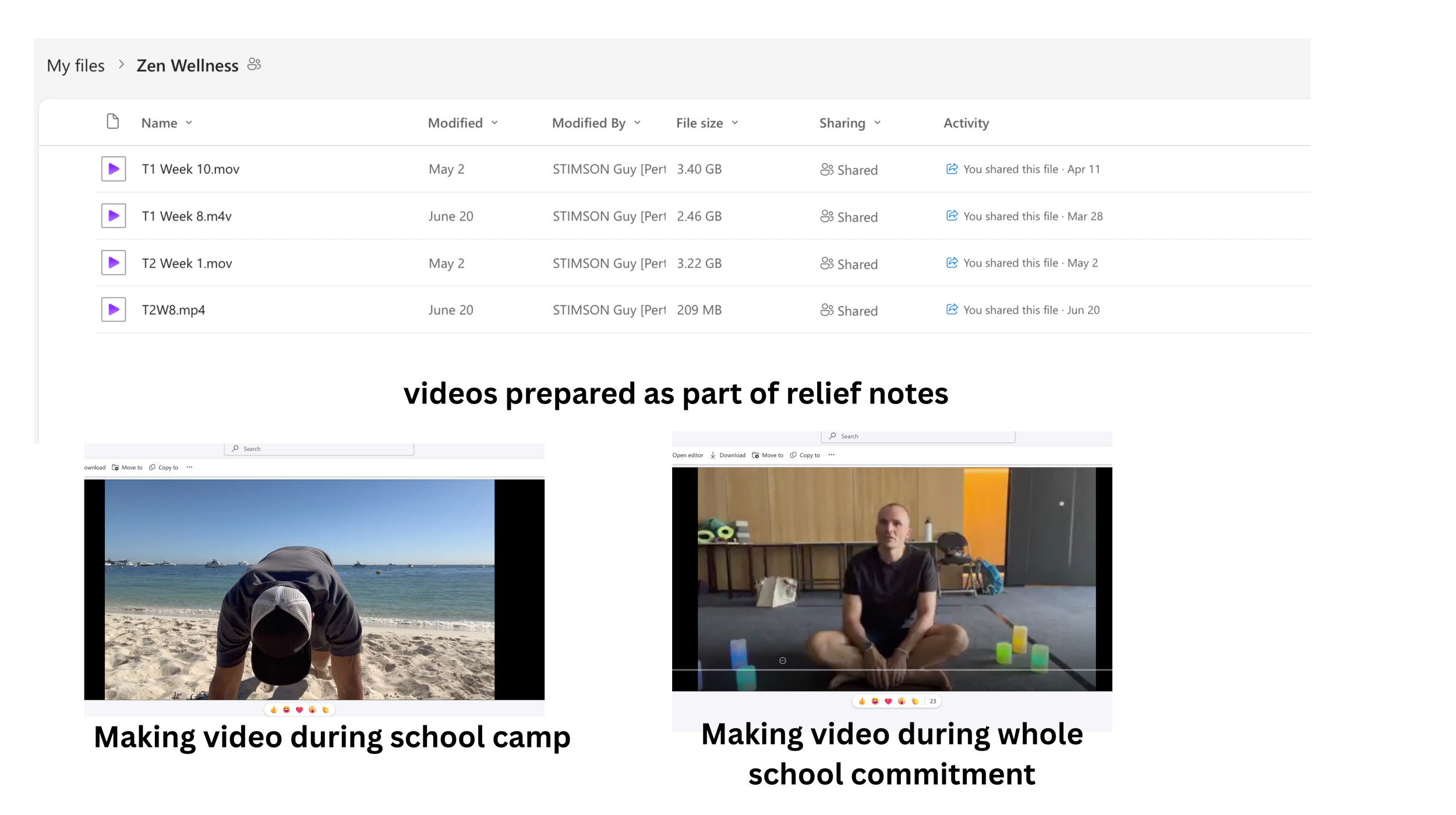
AITSL 4.2 – Managing Classroom Activities through Structured, High-Quality Relief video lessons
The screenshots display the Zen Wellness video library I produced for my classes—purpose-built, high-quality lessons created as part of my relief notes whenever I was away for school camps or whole-school commitments. These videos show me leading mindfulness, breathwork, and movement sessions in different environments (outdoors during camp, indoors between commitments), demonstrating my commitment to ensuring continuity, clarity, and structure in classroom activities even in my absence.
By preparing full-length, sequenced instructional videos rather than leaving generic worksheets, I ensured that students continued to access the personalised wellness curriculum we had built together. This reflects my capacity to organise classroom activities in advance, provide clear directions, and maintain purposeful learning routines—core indicators of AITSL 4.2.
The evidence also shows how Zen Wellness remained stable, predictable, and supportive regardless of my physical location. Students knew exactly what to expect each week: a calm entry, a guided reflective practice, and a structured close. This consistency helped the group maintain emotional regulation and learning focus, illustrating how well-designed routines can sustain engagement for high-performing students.
These resources also allowed me to model self-regulation and resilience, key dispositions I aim to cultivate in gifted adolescents. Even while off-site, I communicated warmth, presence, and psychological safety, ensuring the class environment remained orderly, focused, and aligned with the program's well-being goals.
Together, these images highlight my ability to manage learning activities with foresight and reliability, ensuring students receive a rich, uninterrupted learning experience regardless of circumstance—demonstrating clear alignment with AITSL Standard 4.2.
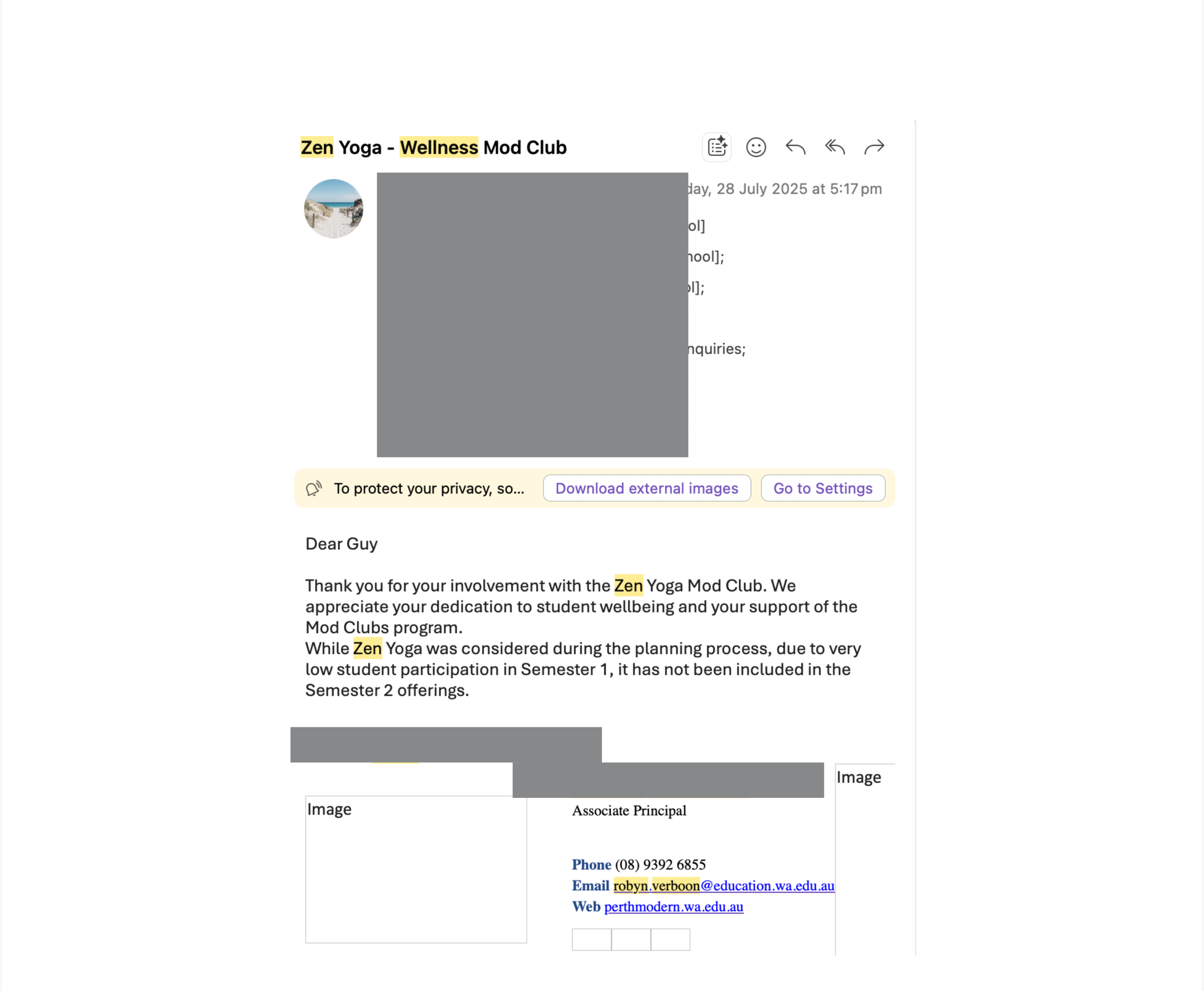
6.3: Engage With Colleagues and Improve Practice
The email shown reflects a decision by the Associate Principal not to continue the Zen Wellness Mod Club due to low student participation. Although the initiative was grounded in student wellbeing and aligned with research into mindfulness for high-performing learners, it did not gain traction within the school community—mirroring previous attempts to introduce similar practices.
This correspondence prompted significant professional reflection. I engaged in ongoing conversations with colleagues about student needs, cultural readiness, and barriers to engagement in mental strength development practices at a high-performance academic school. Through this process, I recognised the importance of adapting delivery modes, timing, and framing when trialling wellbeing initiatives for gifted students.
Despite the club not continuing, the feedback has deepened my commitment to exploring how mindfulness, mental clarity, and emotional regulation can be integrated into academic settings in ways that students will meaningfully access. The dialogue with leadership has informed my next steps, ensuring future iterations are responsive to student culture while still advocating for practices that support high-level performance and long-term well-being.